
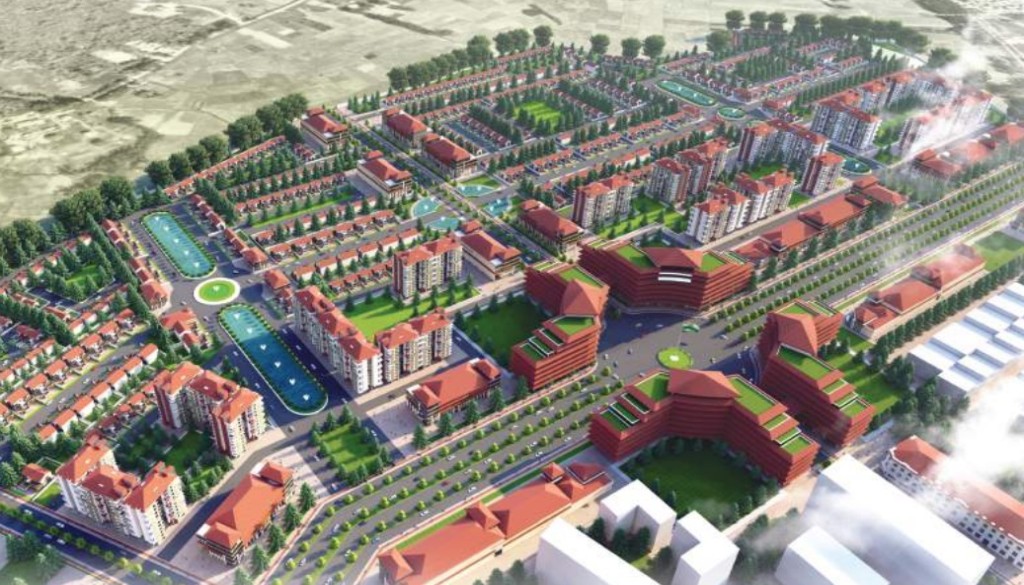
Bihar has embarked on an ambitious urban transformation, with the state government approving 11 greenfield satellite townships across key districts. The decision, taken in a cabinet meeting led by Chief Minister Samrat Chaudhary, aims to address the state’s low level of urbanisation and create new centres of economic growth.
Modelled on cities like Noida and Gurugram, these townships are envisioned as planned urban spaces with organised residential and commercial zones, wide roads, and green infrastructure. By developing satellite cities around existing urban centres, the government hopes to reduce pressure on major cities while improving living standards and attracting investment.
A key feature of the initiative is the adoption of a land-pooling model instead of traditional land acquisition. Landowners are expected to contribute land for development and receive a portion back in a developed form. At the same time, the government has offered an alternative: those unwilling to participate in land pooling can opt for compensation. This dual approach is intended to make landowners stakeholders while also providing flexibility.
The planned expansion spans multiple regions of the state. Around Patna, the proposed Pataliputra township in the Punpun belt is among the largest projects, while Hariharnathpuram near Sonpur in Saran district is expected to benefit from upcoming bridge and airport connectivity. Other townships are planned across Gayaji (Magadh), Muzaffarpur (Tirhut), Bhagalpur (Vikramshila), Saharsa (Kosi), Purnea, Munger (Anga), Sitamarhi (Sitapuram), Chhapra (Saran) and Darbhanga (Mithila), reflecting an effort to distribute urban growth beyond a few major centres.
The scale of the project is significant. Initial township areas are expected to range between 800 and 1,200 acres, with scope for substantial expansion over time. The proposed Pataliputra township near Patna, for instance, is planned on a much larger scale and will include infrastructure such as expressways, logistics hubs, and institutional spaces. Similar developments are planned across districts like Gaya, Muzaffarpur, Darbhanga, and Bhagalpur.
Connectivity and planning are central to the vision. The selected locations are expected to be within close proximity, often around 30 minutes from existing cities and linked through highways and expressways. Planning has also taken into account regional challenges such as flood risks, an important consideration in a state like Bihar. The initiative reflects a shift towards planned urbanisation in a state where city growth has often been unregulated. If implemented effectively, these townships could generate employment, improve infrastructure, and create new economic hubs.
However, effective implementation, coordination across departments, and timely execution will be a challenge. The temporary ban on land transactions has raised concerns among some stakeholders, while the conversion of agricultural land for urban use requires careful balancing. Ultimately, the success of Bihar’s satellite township model will depend on whether it can move beyond planning to execution. If realised as envisioned, it could reshape the state’s urban landscape and provide a much-needed boost to its economy.
