
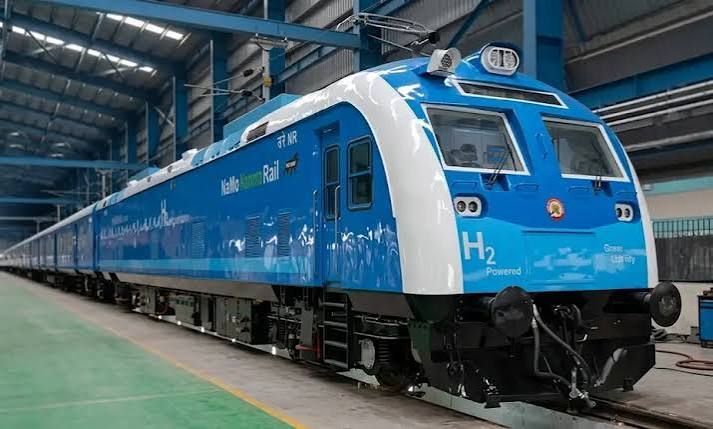
NEW DELHI. Marking a major milestone in India’s transition toward clean and sustainable rail transport, the nation’s first indigenous hydrogen fuel cell train completed over 1,200 kilometres in its initial week of operation between Jind and Sonipat. Flagged off on July 17, the 10-coach train generated 2,400 kW of power through an onboard chemical reaction between hydrogen and oxygen, saving more than 3,200 litres of conventional diesel fuel while emitting only water vapour. Supported by lithium iron phosphate batteries and high-pressure storage cylinders, the train is refuelled at Indian Railways’ newly created dedicated hydrogen facility at Jind, which can hold up to 3,000 kilograms of green hydrogen stored at 500 bar and dispensed at 350 bar.
To ensure robust and reliable operations, Indian Railways integrated comprehensive safety mechanisms adhering to international standards, including automated shut-off systems, continuous ventilation, and specialized detectors for hydrogen leaks, flame, smoke, and heat. Encouraged by the seamless performance on the Jind–Sonipat corridor, preparations are now underway to initiate trial runs on the Delhi route, expanding the footprint of hydrogen-powered rail travel. According to the Ministry of Railways, this pioneering project lays the foundation for a self-reliant, zero-emission hydrogen rail ecosystem, positioning India as a global leader in sustainable public transportation.
