
Dr Gaurav Goel, Surgical Oncologist at HCG Cancer Hospital, Jaipur
For many cancer patients, completing treatment is seen as the finish line, a moment marked by relief, celebration, and hope. Yet while surgery, chemotherapy, radiation, or other therapies may come to an end, the journey to recovery often continues long afterwards.
Advances in cancer care have enabled more people than ever to survive their diagnosis. As a result, the focus of oncology is expanding beyond survival alone to an equally important question: how well are patients able to live after treatment?
The answer lies not only in curing the disease but also in helping survivors rebuild their physical strength, emotional resilience, and sense of normalcy. Rehabilitation has therefore become a critical part of modern cancer care, supporting patients as they regain independence, restore confidence, and improve their overall quality of life.
The Lasting Physical Impact of Cancer Treatment
Cancer affects far more than the tumour itself. The disease and its treatment can leave lasting effects on nearly every aspect of physical health.
Surgery may affect mobility and function through muscle and nerve damage. Chemotherapy can cause fatigue, neuropathy, and cognitive changes, while radiation therapy may lead to tissue stiffness, pain, and reduced flexibility. Hormonal treatments and long-term steroid use can contribute to bone loss, weight changes, and declining muscle strength.
As a result, many survivors continue to face significant physical challenges long after treatment has ended.
Among the most common concerns is cancer-related fatigue, a persistent exhaustion that often does not improve with rest. Unlike ordinary tiredness, this fatigue can interfere with daily activities, work, and social interactions. Muscle loss and weakness are also frequent, making routine tasks such as climbing stairs, carrying groceries, or returning to work considerably more difficult.
Some patients develop lymphedema following lymph node removal or radiation, resulting in chronic swelling and discomfort. Others experience cognitive difficulties, commonly known as “chemo brain,” characterized by memory lapses, difficulty concentrating, and slower information processing. Sexual health concerns, body image changes, and incontinence may further affect physical and emotional well-being.
Without proper rehabilitation, many survivors gradually adapt to reduced mobility and lower levels of activity, increasing the risk of long-term disability and loss of independence.
Why Recovery Requires Movement
For years, patients were advised to rest extensively following cancer treatment. While adequate rest remains important, research now shows that prolonged inactivity can worsen fatigue, accelerate muscle loss, reduce bone density, and negatively affect cardiovascular and mental health.
Today, exercise is recognized as a critical part of cancer recovery.
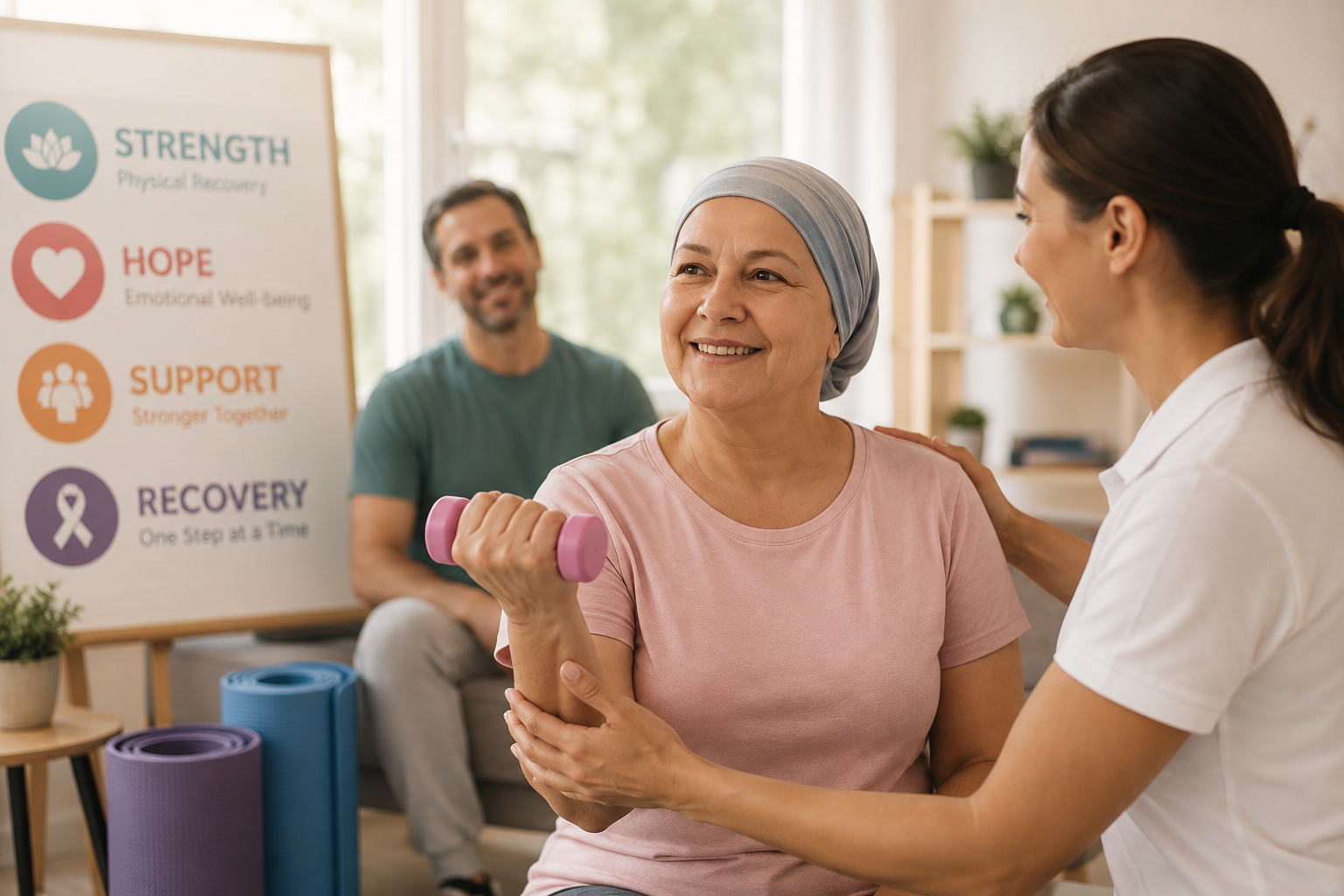
Regular physical activity has been shown to improve energy levels, rebuild muscle strength, enhance mobility, reduce treatment-related side effects, and improve overall quality of life. Structured exercise programs can significantly reduce fatigue while helping patients regain confidence in their physical abilities.
Importantly, rehabilitation is not about athletic performance. It is about restoring function—being able to return to work, care for family members, pursue hobbies, travel comfortably, and participate fully in daily life.
A multidisciplinary rehabilitation approach may include physiotherapy to improve mobility and manage lymphedema, occupational therapy to support daily functioning, speech and swallowing therapy for head and neck cancer survivors, and specialized cardiac rehabilitation for individuals affected by treatment-related heart complications.
The Emotional Recovery That Often Goes Unnoticed
While physical healing receives considerable attention, emotional recovery is often less visible but equally important.
Many survivors describe a sense of uncertainty once treatment ends. During active treatment, appointments, scans, and medical teams provide structure and reassurance. When those routines disappear, patients may suddenly find themselves confronting fears they had little time to process.
Anxiety surrounding follow-up scans and recurrence is common. Many survivors experience ongoing worry about whether the cancer will return. Feelings of survivor’s guilt, grief over physical changes, and concerns about the future can also have a profound impact on mental health.
Relationships may be strained as patients and caregivers adjust to new realities. Changes in appearance, sexual health, and self-image can affect confidence and intimacy. Financial pressures and employment challenges may add further stress during recovery.
These experiences highlight the need for emotional rehabilitation as a routine part of survivorship care.
The Importance of Psychological Support
Seeking emotional support after cancer is not a sign of weakness it is an essential part of healing.
Specialized psycho-oncology services can help patients navigate anxiety, depression, trauma, and uncertainty. Counselling and cognitive behavioral therapy provide practical strategies for managing fear and building resilience.
Support groups also play a valuable role by connecting survivors with others who understand the unique challenges of life after cancer. Sharing experiences often reduces feelings of isolation and fosters a sense of community.
Mindfulness practices, meditation, breathing exercises, and other evidence-based stress-management techniques can improve emotional well-being, reduce stress, and promote better sleep. Many cancer centres now incorporate these approaches into comprehensive survivorship programs.
For some survivors, recovery also involves discovering a renewed sense of purpose through advocacy, volunteering, creative pursuits, or community engagement. These experiences can contribute to what experts describe as post-traumatic growth, a positive psychological transformation that may emerge after a life-altering experience.
Closing the Rehabilitation Gap
Despite growing recognition of its benefits, rehabilitation remains underutilized in cancer care.
Clinical attention is often focused on treating the disease itself, while the long-term physical and emotional consequences of treatment receive less emphasis. Many patients are unaware that rehabilitation services exist or hesitate to seek help because they feel they should simply be grateful to have completed treatment.
Access remains another challenge. Rehabilitation services, counselling, specialized therapies, and supportive equipment may not be readily available or affordable for all patients, particularly those living outside major urban centres.
Bridging this gap will require greater awareness, stronger referral pathways, and a broader commitment to survivorship care within healthcare systems.
Recovery Is More Than Being Cancer-Free
The future of oncology extends beyond diagnosis and treatment. Increasingly, it includes restoration, helping survivors reclaim their health, independence, and quality of life.
For healthcare providers, this means integrating rehabilitation into routine cancer care and measuring success not only through survival statistics but also through functional outcomes and patient well-being.
For patients, it means recognizing that recovery is a gradual process that often requires support long after treatment ends. Asking for rehabilitation services, counselling, nutritional guidance, or survivorship planning should be viewed as a natural part of care.
For families and caregivers, it means understanding that the end of treatment does not automatically mark the end of recovery. Ongoing encouragement, patience, and support remain essential.
Cancer may take a significant physical and emotional toll, but rehabilitation helps survivors regain what the disease has threatened to take away. True recovery is not defined simply by being cancer-free. It is measured by the ability to live fully, move confidently, reconnect with loved ones, pursue meaningful goals, and embrace life beyond cancer.
