
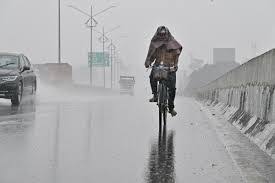
The arrival of the southwest monsoon is one of the most closely watched annual events in India. From farmers preparing their fields to governments planning disaster response, the monsoon shapes agriculture, economy, water security and daily life across the country. In a major technological leap, the India Meteorological Department (IMD) has launched Artificial Intelligence (AI)-enabled monsoon forecasting model that promise to transform how India predicts rainfall and prepares for weather-related challenges.
For the first time, India will receive block-level monsoon forecasts across 15 States and one Union Territory, covering nearly 3,200 administrative blocks. The move signals a transition from broad regional forecasting to hyper-local weather intelligence powered by AI, machine learning, and high-resolution meteorological modelling.
Why Block-Level Forecasting Matters
Until now, monsoon forecasts in India were generally issued at the State or district level. While these forecasts helped governments and agencies prepare broadly, they often failed to capture the uneven and patchy nature of rainfall distribution. In many districts, rainfall can vary dramatically between blocks and villages. A district may officially receive monsoon rains, while several villages remain dry for days. For farmers, such variations are critical. Decisions regarding sowing, irrigation, fertilizer application, and crop protection depend heavily on timely rainfall.
The new forecasting system addresses this long-standing gap by offering highly localized predictions. Farmers will now be able to receive forecasts tailored to their specific block rather than relying on district-wide estimates. This precision is expected to reduce uncertainty in agricultural planning and improve crop management practices.
The Technology Behind the New System
The forecasting system combines AI-based analysis with traditional physics-driven weather models. The framework integrates meteorological data collected by the IMD, global climate and weather prediction models, machine learning techniques, AI-based forecasting tools, and Real-time observational data from weather stations. The system generates probabilistic forecasts for up to four weeks in advance, enabling better medium-range planning. The integration of multiple forecasting approaches aims to improve both accuracy and reliability. Traditionally, forecasting relied primarily on numerical weather prediction models based on atmospheric physics. AI now enables the system to identify hidden patterns, anomalies, and localized weather behaviours from massive datasets much faster than conventional systems alone.
Focus on Monsoon-Sensitive Regions
The new system currently covers 15 States and one Union Territory located largely within India’s “monsoon core zone.” These are regions where agriculture is predominantly rain-fed and highly dependent on the southwest monsoon.
The selection is strategic. In these regions, inaccurate rainfall forecasts can directly affect crop productivity, food security, and rural livelihoods. By improving forecast precision, the IMD hopes to minimize crop losses and strengthen agricultural resilience.
AI and the Future of Weather Forecasting
The IMD’s initiative reflects a global trend where AI is increasingly being integrated into climate and weather sciences. Around the world, meteorological agencies are experimenting with AI models that can process enormous climate datasets, improve prediction speed, and enhance forecast precision.
In India, this transition is especially significant because of the country’s heavy dependence on the monsoon economy. Agriculture still supports a large rural population, and rainfall variability directly impacts inflation, food production, energy generation, and water availability. AI-enabled forecasting can potentially improve crop planning, reservoir management, flood preparedness, insurance risk assessment, climate adaptation strategies and rural advisory services. The use of AI also aligns with India’s broader push toward digital governance and technology-driven public service delivery.
Challenges and the Road Ahead
Despite its promise, the system will face important challenges during its initial implementation. Meteorologists have already warned that the 2026 monsoon season may experience “below normal” rainfall conditions due to the development of an El Niño event in the Pacific Ocean. Weak and irregular monsoons are generally harder to predict accurately than stable rainfall systems. Therefore, the upcoming monsoon season will effectively serve as a real-world test for the AI-based forecasting framework. Another challenge involves data infrastructure. Hyper-local forecasting requires dense observational networks and continuous real-time data collection. Many regions in India still lack sufficient weather monitoring infrastructure. Expanding the system nationwide will require substantial investments in meteorological technology, data integration, and computational resources. There is also a growing need to ensure that forecasts are translated into accessible local advisories. Technology alone cannot guarantee impact unless farmers, local administrations, and disaster management agencies can effectively use the information provided.
The launch of AI-enabled block-level monsoon forecasting marks a significant milestone in India’s meteorological and technological journey. By combining artificial intelligence with traditional weather science, the IMD is moving toward a more precise, localized, and actionable forecasting system. This development has the potential to reshape agricultural planning, disaster management, and climate resilience across India. At a time when climate uncertainty is increasing, hyper-local forecasting could become one of the most important tools for protecting livelihoods and improving preparedness.
