
CWC to Upgrade Existing Warehouses with Low-Cost Cold Storage Facilities
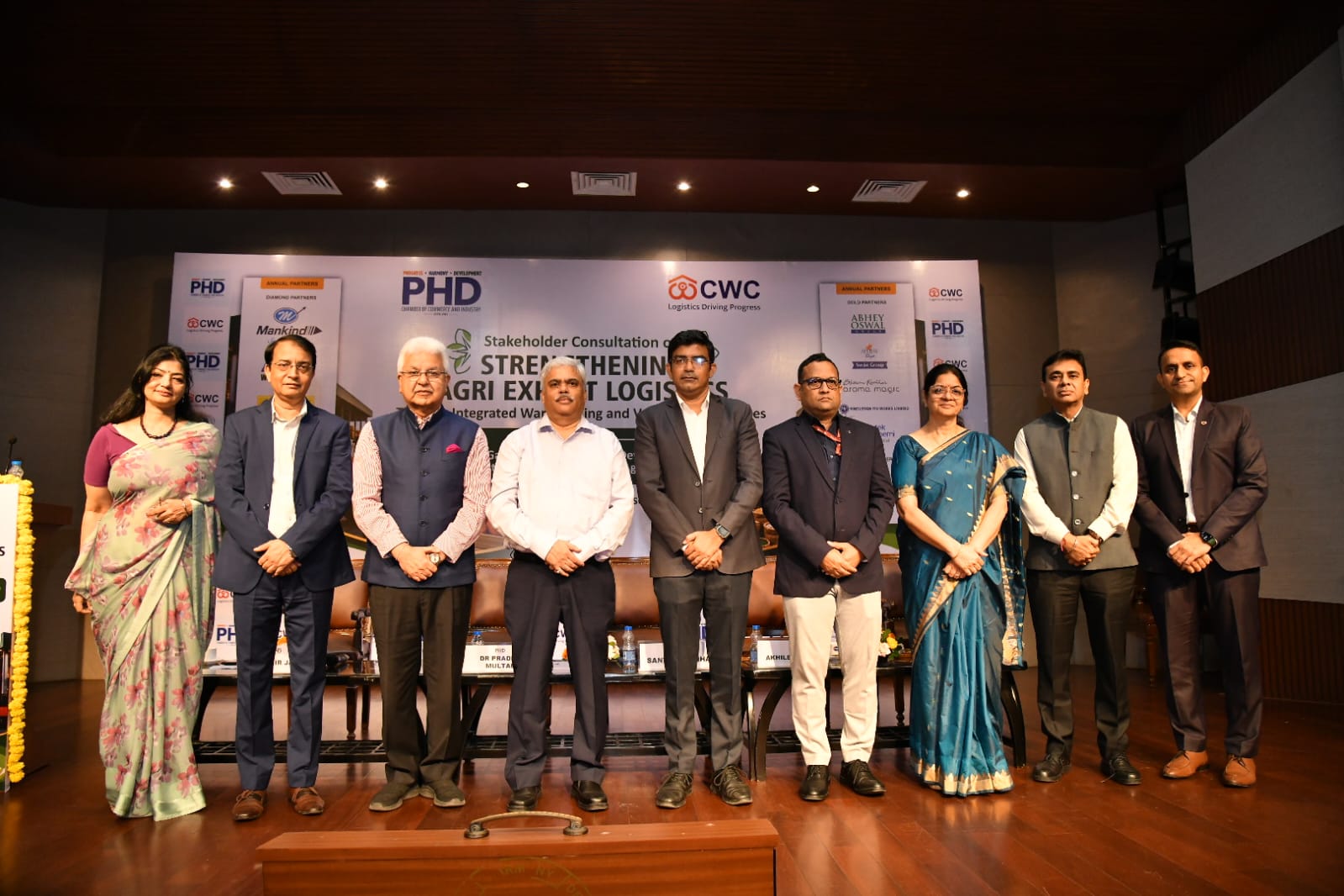
New Delhi, September 7, 2026: PHD Chamber of Commerce and Industry (PHDCCI), in association with the Central Warehousing Corporation (CWC), organised a stakeholder consultation on “Strengthening Agri-Export Logistics through Integrated Warehousing and Value-Added Services” with the theme “From Farm Gate to Global Markets: Developing Integrated Logistics Solutions for India’s Agri-Exporters” at PHD House, New Delhi, bringing together senior representatives from government agencies, industry, exporters, logistics and warehousing stakeholders and other sectoral experts to deliberate on strengthening India’s agri-export ecosystem and developing efficient solutions from farm gate to global markets.
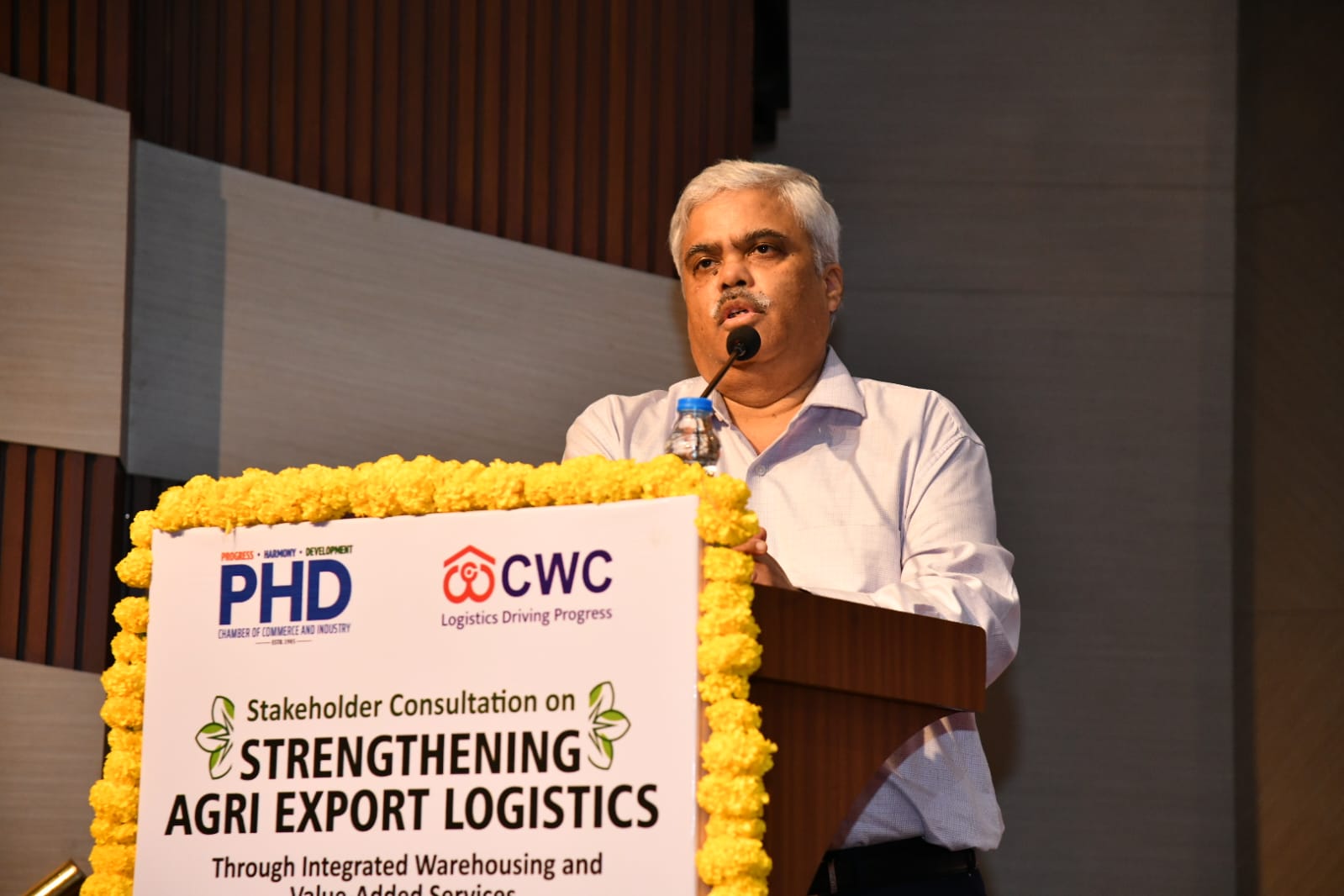 Speaking at the event, Mr. Santosh Sinha, Managing Director, Central Warehousing Corporation (CWC), highlighted the urgent need to strengthen India’s agri-export logistics infrastructure to reduce post-harvest losses and enhance the global competitiveness of Indian produce. He noted that CWC, which began its journey in 1957 with seven warehouses established to address farmers’ distress sales caused by inadequate storage, has today expanded to over 950 warehouses across the country. He further noted that India produces around 360 million tonnes of fruits and vegetables annually, of which an estimated 25–30 per cent is lost post-harvest due to inadequate storage, cold-chain facilities and logistical challenges. Mr.Sinha said CWC is working towards leveraging its extensive warehousing and EXIM network to offer integrated solutions for agri-exporters, including storage, cold-chain, quality control, phytosanitary certification and export logistics. He emphasised that CWC has specialised technical expertise to provide international-standard phytosanitary certification, which can help minimise the risk of rejection of Indian consignments at overseas destinations. He also highlighted CWC’s efforts to develop cost-effective, commodity-specific cold-storage solutions, including through its engagement with IIT Delhi, along with the adoption of digital and AI-based container tracking systems across its key facilities. With its presence across major ports, ICDs and CFSs, Sinha said CWC is well positioned to provide a single-window logistics solution from the farm gate to the ultimate customer, integrating road, air and coastal transportation while helping bring down logistics costs for exporters.
Mr. Akhilesh Gupta, Deputy Director, Regulatory Compliance Division, FSSAI, outlined the regulatory framework applicable to food businesses and exporters. He highlighted the importance of appropriate compliance and certification mechanisms, while clarifying the regulatory requirements applicable to export-oriented food businesses. He also emphasised the role of risk-based inspections and destination-country requirements in facilitating compliant food exports.
Dr. Pradeep Multani, Chairman-Emeritus, Multani Pharmaceuticals Ltd., stressed the need to move beyond conventional warehousing and develop integrated logistics and value-added centres offering sorting, grading, packaging, labelling, quality testing, temperature-controlled storage and traceability. He said greater adoption of technology and digitalisation, including real-time inventory management, end-to-end traceability and temperature monitoring, would be critical for improving supply-chain visibility and enabling Indian exporters to meet international quality requirements.
Mr. Pawan Kumar, Group General Manager (General)/Regional Manager, CWC, stressed that integration is critical to reducing logistics costs and improving export efficiency. He highlighted CWC’s capabilities across procurement, quality control, assaying, sorting, grading, storage, export facilitation and certification, stating that an integrated approach can provide exporters with a more seamless and reliable supply-chain solution.
Dr. Nasir Jamal, Assistant Secretary General, PHDCCI, said India’s expanding agricultural base, food-processing capabilities and growing global demand make it imperative to build a more efficient agri-export logistics ecosystem.“Warehousing can no longer be viewed merely as a storage facility. It must evolve into an integrated ecosystem,” Dr. Jamal said, calling for greater convergence among government agencies, industry, logistics providers, regulatory authorities and exporters to reduce logistics costs, minimise wastage and improve export competitiveness.
The consultation further deliberated on leveraging CWC infrastructure for agri-export promotion, facilitation of quarantine and pest-control requirements, quarantine issues impacting agri-exports, exporters’ logistics and warehousing challenges, trade facilitation, and practical challenges in agri-export logistics.
The discussions highlighted the need for stronger farm-to-port integration, specialised warehousing and cold-chain infrastructure, quality and phytosanitary certification, digital traceability and coordinated regulatory mechanisms to reduce post-harvest losses and position India as a reliable global supplier of agricultural and processed food products.
