
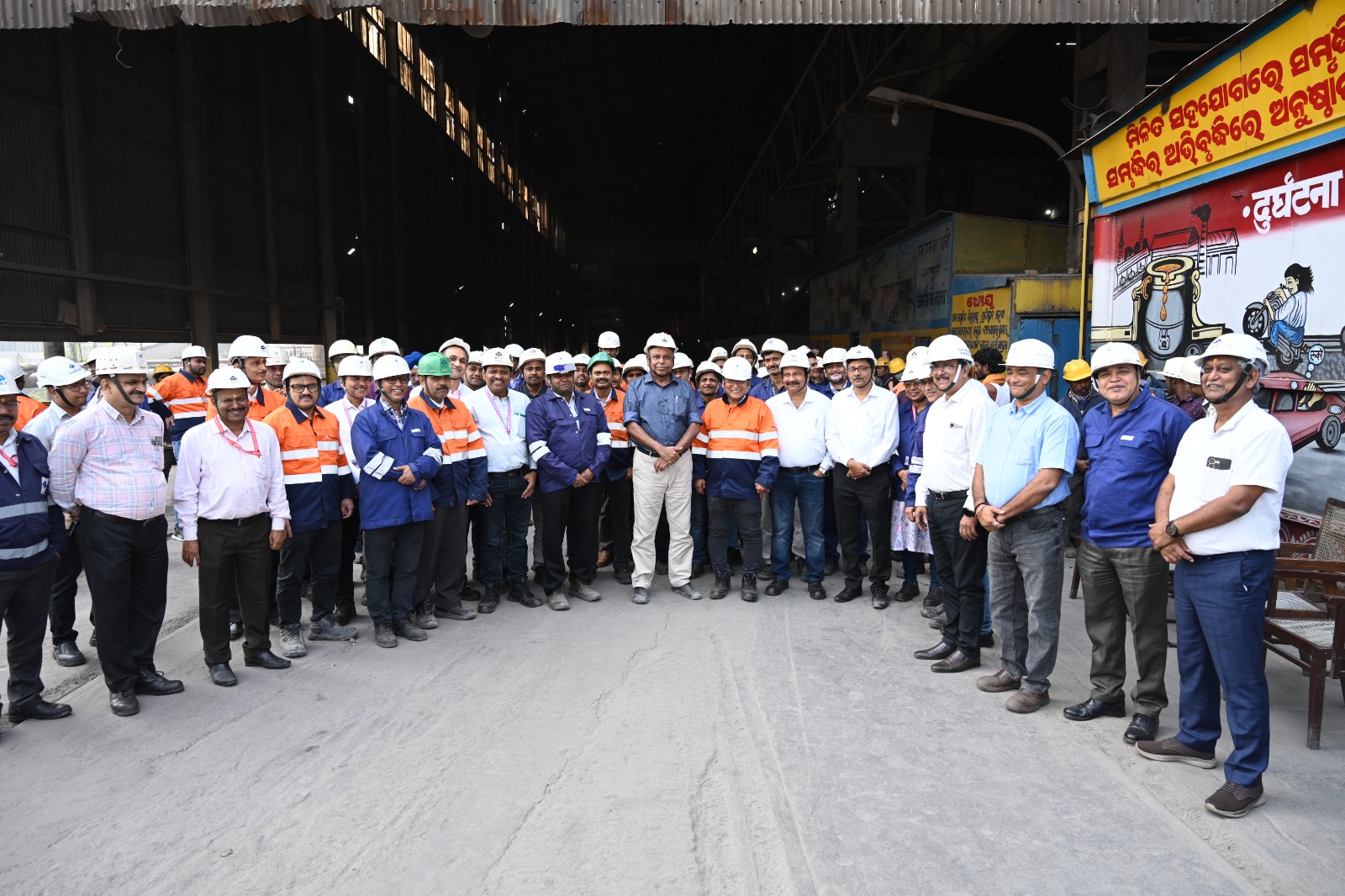
Steel Melting Shop-1 of SAIL, Rourkela Steel Plant, successfully commenced simultaneous blow in both its converters on 16th November 2026, for the first time since its inception. Mr. Alok Verma, The Director In-charge (DIC), visited SMS-1 on 17th November and congratulated the collective on the historical accomplishment. Describing the achievement as a significant operational milestone, the DIC said, “Initially, it was perceived as difficult, but strength is not in what you do today. Strength lies in doing what you once thought was not possible.” He appreciated the SMS-1 collective for its perseverance and teamwork in achieving the new operational capability. Describing SMS-1 as a highly disciplined team, he said that it is the responsibility of leadership to ensure that the employees are adequately motivated and their collective strength is channelised in the right direction.
The DIC emphasised that safety must remain paramount in all operations. “Safety is important and non-negotiable. There can be no compromise on this front,” he asserted.
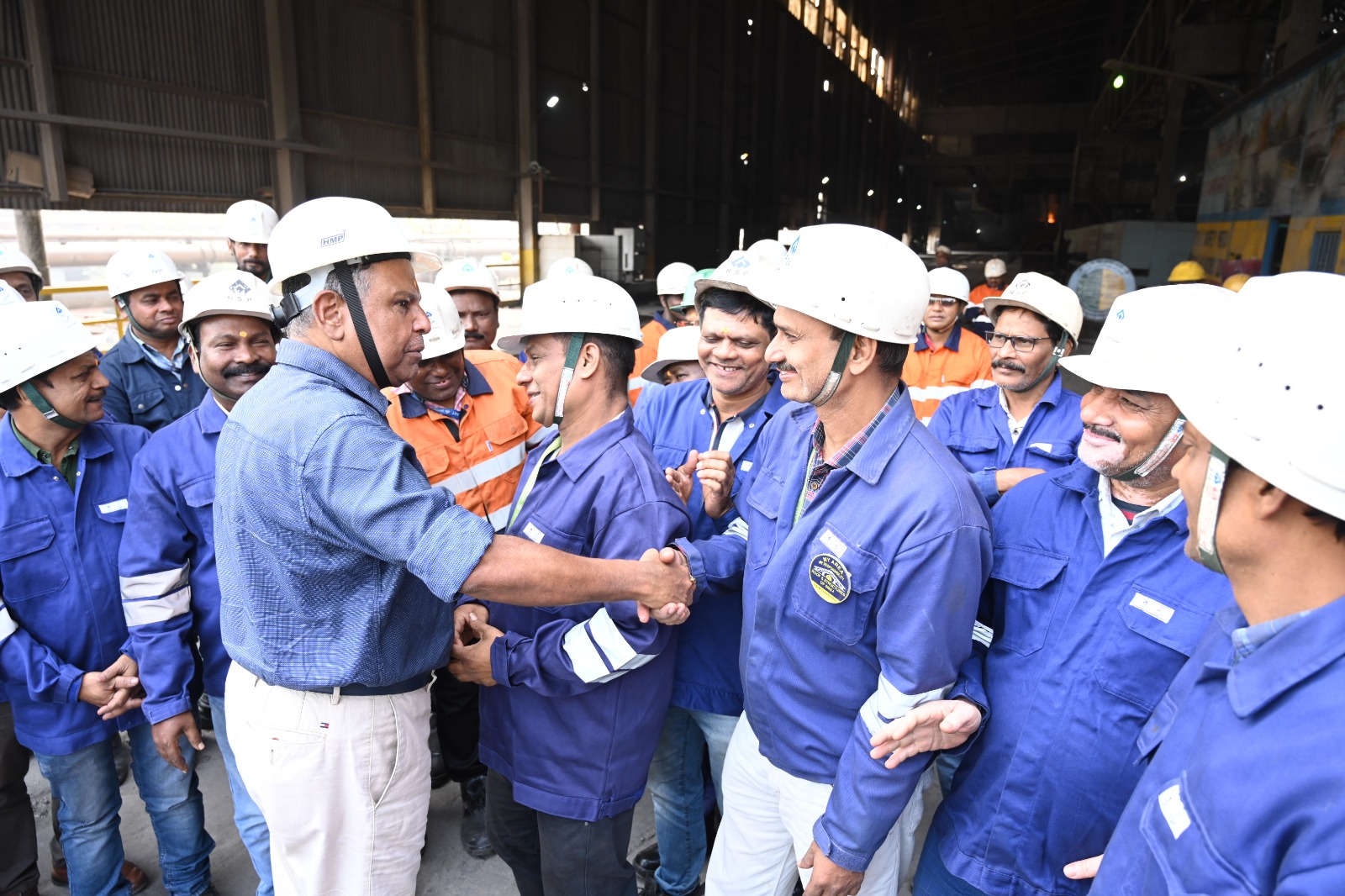
Encouraging the team to sustain the momentum, Mr. Verma called upon the SMS-1 collective to work towards achieving the target of 30–32 heats per day. He expressed confidence that, with the same spirit of teamwork, discipline and commitment to safety, the unit would continue to set new benchmarks in operational excellence.
The DIC was accompanied by Mr. DK Mishra, ED (Materials Management), Mr. BR Palai, ED (Works), Mr. S Palchowdhury, ED (Projects), Mr. Rajesh Dasgupta, CGM In-charge (F&A), many senior officers of the plant.
The successful commencement of simultaneous blowing is expected to enhance production throughput, improve utilization of equipment and manpower, and reduce the cost of production per tonne of steel.
To enable simultaneous blowing, the Energy Management Department (EMD) drew an additional 100 mm diameter parallel nitrogen line from the grid to supplement the existing 80 mm diameter line.
The initiative is expected to support a production ramp-up of thereby increasing overall production throughput. Improved synchronisation between blowing and casting operations will enhance daily casting potential and facilitate achievement of production targets. Better utilisation of available resources and reduced process delays will contribute to lower cost of production, while reduced holding time of heats will minimise Fe-alloys and aluminium consumption through fewer re-adjustments and recovery losses.
