
~ Tata Steel to collaborate with IIT Hyderabad, IIT ISM Dhanbad, J K Cement, and Swedish partners – Cemvision and Green14, to drive net-zero pathways ~
Bengaluru, December 9, 2025: Tata Steel has been awarded funding under the Indo-Sweden Industry Transition Partnership (ITP) for two collaborative projects focused on accelerating decarbonisation in the steel and cement sectors. The ITP initiative is supported by LeadIT, the Department of Science and Technology (Government of India), and the Swedish Energy Agency, and is designed to fast-track the development of technologies that can enable deep emission reductions across heavy industries.
Under this programme, Tata Steel will lead two research and innovation projects in partnership with academic institutions and technology companies from India and Sweden. This cross-border collaboration reflects a shared commitment by both governments to support industrial transformation through science, technology and joint innovation, particularly in sectors that are central to the global energy transition.
 Commenting on the partnership, Subodh Pandey, Vice President –Technology, R&D, NMB and Graphene, Tata Steel, said: “Tata Steel is committed to pioneering disruptive technologies through active collaboration. Working with leading Indian and Swedish partners allows us to combine complementary strengths and accelerate technologies that can meaningfully reduce emissions. These projects reflect the direction in which industrial innovation needs to move – towards solutions that are science-led, collaborative and scalable.”
The first project, ‘MiCOBlast’, focuses on the development of a microwave plasma-assisted technology for converting blast furnace off-gases into value-added products. Working with IIT Hyderabad and Swedish partner – Green14, the project aims to demonstrate a viable pathway for industrial carbon utilisation by re-engineering the way carbon-rich gases are treated within the steelmaking process. By advancing this technology towards pre-piloting readiness, the project has the potential to significantly reduce emissions from traditional ironmaking.
The second initiative, ‘Steel Slag Reborn’, addresses the resource efficiency challenge across both the steel and cement value chains. In collaboration with IIT ISM Dhanbad, J K Cement and Sweden’s Cemvision, the project will work on recovering high-value metallics from steel slag while converting the remainder into sustainable supplementary cementitious material. This dual-benefit approach not only reduces waste but also contributes to lowering the carbon intensity of cement—one of the most emission-intensive materials globally.
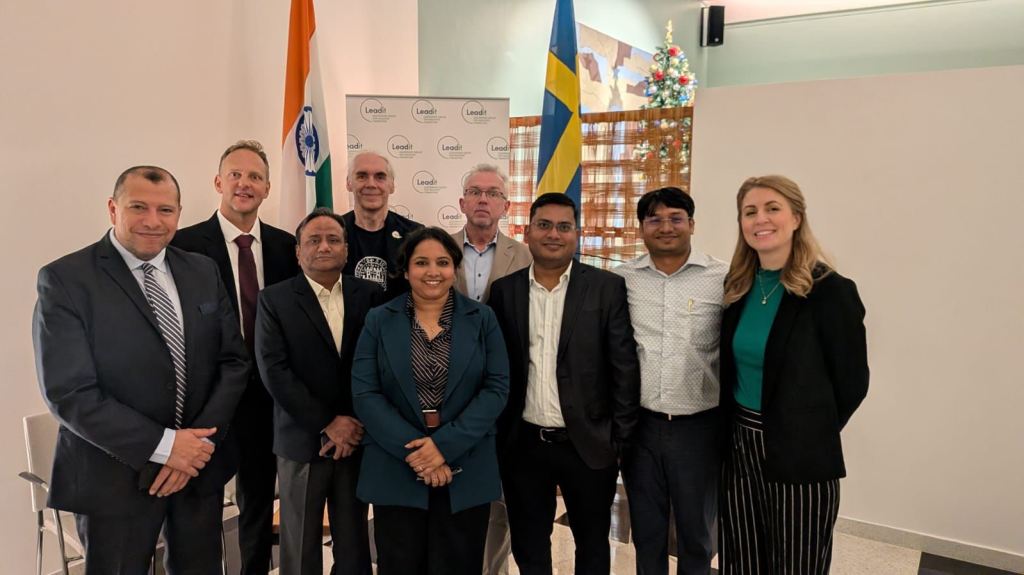
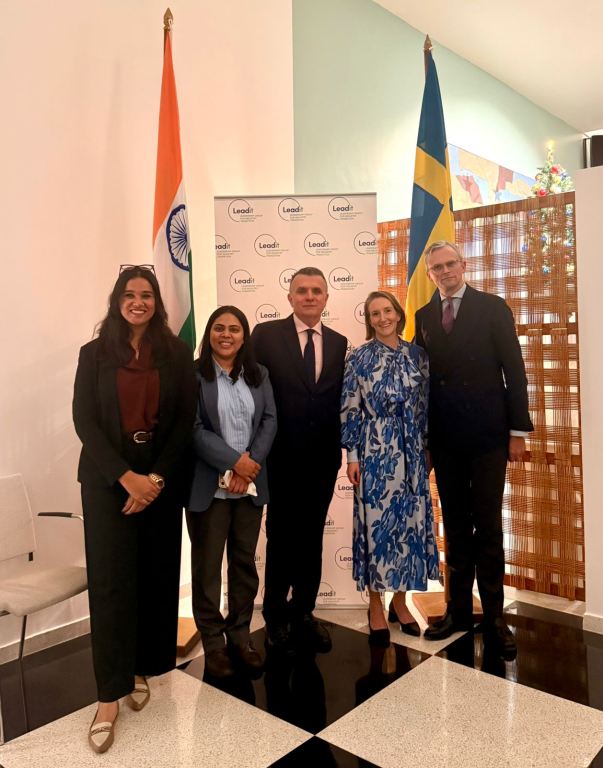
These projects were formally announced at COP30 in Brazil, scheduled from November 15-17, 2025, underscoring their alignment with global climate goals and the urgency of accelerating industrial decarbonisation. The official project kick-off took place at the Swedish Embassy in New Delhi on December 8, 2025, marking the start of a two-country collaboration supported by strong scientific and technological capabilities.
The Indo–Sweden partnership represents more than joint research; it marks a deepening of shared priorities between the two countries in shaping the next generation of climate-smart industrial solutions. For Tata Steel, it reinforces a long-standing commitment to innovation-led decarbonisation and the belief that collaboration across borders is essential to building a low-carbon future for heavy industries worldwide.
