
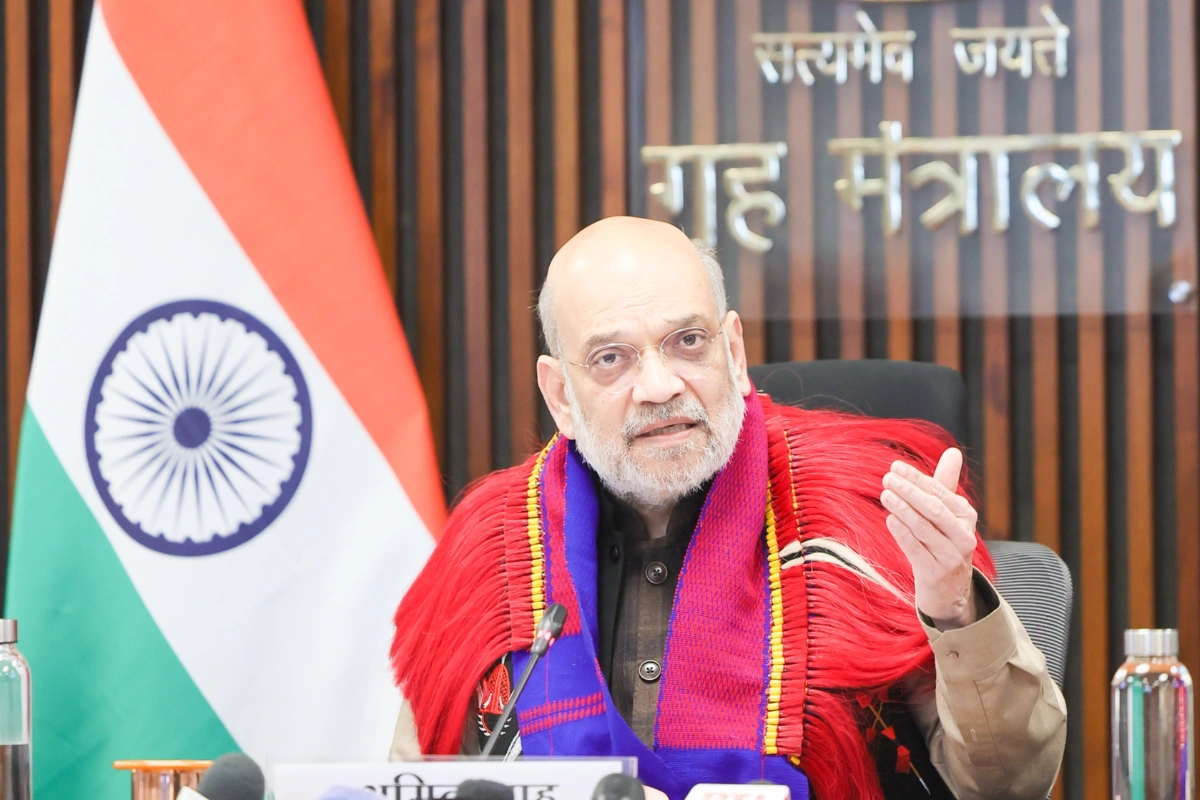
NEW DELHI. Union Home Minister Amit Shah on Tuesday said security agencies led by the Indian Cyber Crime Coordination Centre (I4C) have saved or frozen more than Rs 8,000 crore out of Rs 20,000 crore siphoned off by cybercriminals till November 30, 2025. Addressing the National Conference on Tackling Cyber-Enabled Frauds and Dismantling the Ecosystem, organised by the CBI in collaboration with I4C under the Ministry of Home Affairs, Shah said 82 lakh cybercrime complaints had been received by that date, of which 1.84 lakh were converted into FIRs. He stressed that cybercriminals are now operating in an institutionalised manner and often remain technologically ahead of law enforcement, calling for the next phase of action to further strengthen fund recovery and crime prevention. Since the formalisation of I4C’s real-time reporting mechanism in 2020, the government has built a robust anti-cybercrime framework, onboarding 62 banks and financial institutions so far, with plans to bring all cooperative banks into the system by December 31. Shah reiterated the government’s commitment to safeguarding citizens and presided over the investiture ceremony of CBI officers, inaugurated the CBI’s new Cybercrime Branch, and launched the S4C Dashboard of I4C.
The conference was convened amid India’s rapid digital expansion under the leadership of Prime Minister Narendra Modi, which has improved access to banking, governance and communication but also created new vulnerabilities exploited by organised cybercrime networks. The CBI, investigating cyber offences since 2000, strengthened its capabilities by establishing a dedicated Cybercrime Investigation Division in 2022 and serves as the nodal agency for cybercrimes affecting the Central government, handling both cyber-dependent crimes and cyber-enabled frauds. Officials said the conference aimed to build a shared understanding of the scale and evolving trends of cyber fraud and examine its three critical pillars — financial (mule accounts and money laundering), telecom (misuse of SIM/eSIM and digital infrastructure), and human (cyber slavery and trafficking into scam compounds). It also focused on enhancing inter-agency and public-private collaboration, leveraging artificial intelligence and data analytics to scale investigations, improving real-time fraud reporting and fund tracing, ensuring timely preservation of digital evidence, and strengthening victim protection through a unified national strategy.
